
Some Reflections on Sliding Mode Control


 share
share
Romeo Ortega – Instituto Tecnológico Autónomo de México, Mexico
In this talk we share some reflections of the author regarding the use of sliding mode controllers (SMC). We believe the abundant, and ever increasing, appearance of this kind of works on our scientific publications deserves some critical evaluation of their actual role, relevance and pertinence.
First, we illustrate with examples from the literature the procedure followed by most of these designs, namely:
(i) “Rewrite” the system dynamics as a “good term” perturbed by some “disturbance” (usually assumed bounded).
(ii) Via the inclusion of an infinite gain operator, i.e. a relay, “dominate” this disturbance to impose a sliding regime in some subspace of the systems state.
Second, we bring to the readers attention the fact that prevailing engineering practice in many applications, instead of “destroying” the systems structure, wisely exploit its physical properties, which are inherited from the well-established laws that rule their behavior.
Finally, to experimentally illustrate with the specific example of a simple pendular device—subject to unknown friction forces and with only measurement of position—the catastrophic performance of an adaptive SMC reported in the literature and compare it with a well-known immersion and invariance controller design.
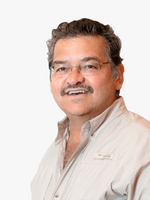
Biography: Romeo Ortega was born in Mexico. He obtained his BSc in Electrical and Mechanical Engineering from the National University of Mexico, Master of Engineering from Polytechnical Institute of Leningrad, USSR, and the Docteur D‘Etat from the Polytechnical Institute of Grenoble, France in 1974, 1978 and 1984 respectively. He then joined the National University of Mexico, where he worked until 1989. He was a Visiting Professor at the University of Illinois in 1987-88 and at McGill University in 1991-1992, and a Fellow of the Japan Society for Promotion of Science in 1990-1991. He was a member of the French National Research Council (CNRS) from June 1992 to July 2020, where he was a “Directeur de Recherche” in the Laboratoire de Signaux et Systèmes (Centrale-Supelec) in Gif-sur-Yvette, France. Currently, he is a full time Professor at ITAM in Mexico and a Distinguished Professor of ITMO University in Russia. His research interests are in the fields of nonlinear and adaptive control, with special emphasis on applications.
Dr Ortega has published five books and more than 400 scientific papers in international journals, with an h-index of 100. He has supervised 35 PhD thesis. He is the recipient of the “Automatica Best Paper Award (2014-2016)” and “IFAC High Impact Paper Award 2026”. He is a Fellow Member of the IEEE since 1999 (Life Fellow since 2020) and an IFAC Fellow since 2016. He has served as Chairman in several IFAC and IEEE committees—including twice Chairman of the “Automatica Best Paper Award Committee” for the periods of 1996-1999 and 2009-2012. He has participated in various editorial boards of international journals. He is currently Editor in Chief of Int. J. on Adaptive Control and Signal Processing and Senior Editor of Asian J. of Control.
Location
Lassonde Building
Canada