
Toward Learning-Enabled and Feedback-Driven Motion Planning for Robotic Systems


 share
share
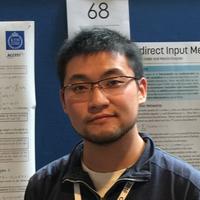
Han Zhang – Associate Professor, School of Automation and Intelligent Sensing, Shanghai Jiao Tong University, China
Robotic motion planning is increasingly required to operate in uncertain, dynamic, and partially observed environments. In such settings, the classical formulation of planning as a fixed optimization problem becomes insufficient: the objective function may be difficult to specify, environmental models and sensor measurements may be noisy, and real-time computation must be performed under uncertainty and safety constraints.
In this talk, I will present a research program that connects inverse optimal control, robotic perception, and optimization-based planning. The central idea is to move from manually specified planning formulations toward planning systems that can learn task objectives from data, construct feedback from perception and SLAM, and solve motion planning problems robustly and efficiently. I will introduce our work on inverse optimal control for learning latent objectives and behavioral trade-offs, simultaneous localization and mapping for pose and environmental feedback, and optimization methods for safe trajectory generation under uncertainty. I will also discuss applications to mobile robotic systems, articulated robots, and rehabilitation and assistive robotic platforms.
The broader goal is to develop planning and control methods that are not only mathematically grounded, but also deployable in real robotic systems. The talk will conclude with open problems on objective identifiability, uncertainty-aware planning, and the integration of learning, control, and perception for robotic systems operating in uncertain environments.
Speaker Bio: Han Zhang received his B.Eng. and M.Sc. degrees from Shanghai Jiao Tong University in 2011 and 2014, respectively, and his Ph.D. degree from KTH Royal Institute of Technology in Sweden in 2019. He is currently an Associate Professor at the School of Automation and Intelligent Sensing, Shanghai Jiao Tong University.
His research lies at the intersection of control theory, optimization, statistical learning, and robotics. His work focuses on inverse optimal control, trajectory planning, robotic perception, and system identification, with applications to motion planning and feedback control for robotic systems in uncertain environments. His publications include papers in leading control and robotics venues, including Automatica and IEEE Transactions journals.
Location
André-Aisenstadt Building
Université de Montréal Campus
Montréal QC H3T 1J4
Canada