
Prospective Students
Studying at GERAD
First of all, GERAD does not recruit students directly. GERAD members themselves provide their students with access to our facilities and community. To study at GERAD, you must first identify one of our members, as well as a theme and a research topic, and then register at the university to which that member is attached. Naturally, you need to reach an agreement and find a way to awaken the interest of the researcher you are contacting, plus deal with all administrative and funding issues.
The best place to start is our directory, where you can search among our members to find out which ones have research interests that match yours. Then, contact them directly to discuss different possible scenarios. Our Job offers section also regularly lists projects that are actively seeking students at various levels.
Live in Montréal, a creative university city
Greater Montréal, which is North America’s second university city (after Boston) in terms of the number of students per capita, offers a stimulating environment for research-oriented studies.
It is Canada’s university capital, with 11 university institutions and 313,000 students, 58,000 from abroad.*
This multicultural metropolis also benefits from an ecosystem of innovative companies and is one of the world leaders in high value-added sectors.
*Data from the Interuniversity Cooperation Office (BCI), October 2023.
Profiles
Here are some profiles of our current students who explain just how they got to GERAD:
Omar Boussouf
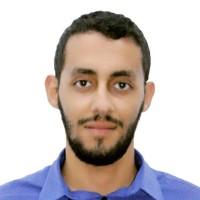
I am a doctoral student in industrial engineering at Polytechnique Montréal, under the supervision of Professors Issmail El Hallaoui (Director) and Amina Lamghari (Co-Director). My research focuses on the design of fertilizer logistics networks in East Africa in a context of uncertainty. It is part of strategic maritime and land transport planning, integrating stochastic modeling and optimization approaches.
Before starting my PhD, I completed two master's degrees: the first in Intelligent Processing Systems at Mohammed V University in Rabat, where I studied artificial intelligence and data mining, and the second in Data Science and Engineering at the University of Rouen, focusing on machine learning and complex data analysis.
My end-of-studies internship at GERAD was the starting point for my doctoral thesis. During this internship, I worked on the application of machine learning to vehicle routing problem. Although it took place remotely due to the COVID-19 pandemic, I benefited from high-quality supervision from my advisor and two postdoctoral researchers, Adil and Mayssoune, who also contributed their experience as former GERAD students. I was also able to count on effective technical support, particularly for access to high-performance computing resources, which greatly facilitated my work. What I particularly appreciated at GERAD was the environment that encourages both the exchange of ideas and the development of analytical methods for solving complex problems.
Beyond the scientific aspect, the human environment is also very enriching. Access to offices and facilities facilitates interaction between members and encourages collaboration. The staff provides valuable support, enabling us to work in good conditions and easily access the necessary resources. For example, they assisted us in the development and promotion of OR@Africa, an initiative I co-founded with other GERAD members to promote the use of optimization and data analysis to support decision-making in Africa.
In the long term, I hope to continue my work at the intersection of optimization and data science, contributing to the design of sustainable and resilient logistics networks.
Sara Ghaboulian Zare

I am a PhD candidate in the Département d’informatique et de recherche opérationnelle at Université de Montréal and a member of GERAD since September 2022. I have the privilege of being co-supervised by Professors Olivier Bahn, Normand Mousseau, and Martin Trépanier, whose guidance affords me access to the experts, partners, data, and tools essential to my PhD. My research sits at the intersection of energy-system modeling, optimization, computer science, and the energy transition. In my thesis, I use energy models and machine-learning methods, grounded in robust optimization, to evaluate pathways for integrating hydrogen technologies that are both competitive and resilient under uncertainty.
At GERAD, I have benefited from its friendly, collaborative culture, seminars, and strong links to industry and policymakers, an ideal setting to turn models into practical guidance. I attend weekly talks and training workshops that help me exchange ideas, receive feedback, and connect with experts across many projects. I also benefit from mentorship by senior researchers, peer support from other students, and an environment that values EDI. These resources strengthen both my technical and interpersonal skills and help me manage the projects I’m involved in such as the Canada–Germany H2CliP project, the ECCC-funded study on municipal hydrogen options, and my NRCan internship on hydrogen deployment and the integration of AI into uncertainty management. These experiences are helping me grow as a researcher and prepare for a future role as a research scientist.
Juan Sebastian Riveros Perez
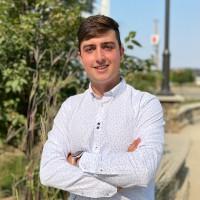
I'm a Ph.D. student in Logistics and Operations Management at HEC Montréal, under the supervision of Professors Jorge E. Mendoza and Jean-François Cordeau. My research focus on the Mixed Capacitated Arc Routing Problem with Intermediate Facilities under Time Restrictions and Stochastic Demands (MCARPTIF-SD), a novel optimization problem inspired by municipal waste collection in Greater Montréal. My work combines stochastic modeling, spatial data analysis, and large-scale optimization to improve the efficiency and sustainability of urban service systems.
Prior to my doctoral studies, I've completed both my bachelor’s and master’s degrees in Industrial Engineering at Universidad de los Andes in Bogota, Colombia. My academic background includes applied research in vehicle routing for agricultural supply chains, as well as machine learning projects for the mining sector through a collaboration with AltaML and the Government of Alberta.
Beyond my research, I'm actively involved in academic leadership and community engagement. I serve as a Student Representative and member of the Equity, Diversity, and Inclusion (EDI) Committee at GERAD, and I'm Vice President of Communications for the revived Montreal Student Chapter of the Canadian Operational Research Society (CORS), which brings together graduate students in Operations Research from across the city.
Christina Soldati
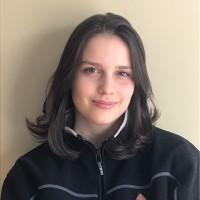
I am a doctoral student in electrical engineering at Polytechnique Montréal under the supervision of professors Antoine Lesage-Landry, Sébastien Le Digabel and Miguel F. Anjos. My research interests focus on blackbox optimization applied to electrical networks. More specifically, as part of my PhD, I am working on developing an approach based on blackbox optimization for the efficient management of active distribution networks. This is part of the energy transition, which is defined in particular by the modernization of distribution networks, which are becoming more active in managing their operations in the face of fluctuating demand and intermittent production sources such as distributed energy resources.
Towards the end of my bachelor's degree in electrical engineering, my interest in research and my desire to further my knowledge in the field of electrical networks led me to pursue a master's degree. My thesis, which I presented at the end of the summer of 2025, focuses on the optimization of blackboxes applied to the reconfiguration of distribution networks, considering the presence of distributed energy resources. I was fortunate to be supervised during my master's degree by Professors Antoine Lesage-Landry and Sébastien Le Digabel, who encouraged me to pursue a PhD afterwards. In addition, towards the end of my master's degree, I had the privilege of collaborating with Professor Miguel F. Anjos during a research stay of several months at the University of Edinburgh.
I have been a member of GERAD since May 2023. I have benefited from a welcoming and collaborative environment where I have learned a great deal from other professors, researchers, and students, all working in fields related to operations research and optimization. These are fields I knew very little about before starting my master's degree, so being able to evolve in this stimulating environment greatly motivated me to learn new things. I also benefited from very formative supervision and access to computational resources and technical support, which greatly helped me to complete my master's project.
I have just started my PhD, still as a member of GERAD. I hope to continue my development as a researcher, taking advantage of seminars and exchanges to gain expertise and expand my professional network.